|
51st International Symposium on Mathematical Foundations of Computer Science August 24 – 28, 2026, Paris, France Preceded by the Young Researcher's Forum, August 23 |
|
The Mathematical Foundations of Computer Science conference series is a high-quality venue for original research in all branches of Theoretical Computer Science. MFCS is among the conferences with the longest history in the field — the first conference in the series was held in 1972. Traditionally, the conference moved between the Czech Republic, Poland, and Slovakia; since 2013, the conference has traveled around Europe. The 51st conference on Mathematical Foundations of Computer Science will take place in Paris, France, from August 24th until August 28th, 2026 The conference will be preceded, on August 23rd, by the Young Research Forum Workshop intended for students and postdocs. NEW: Up to 10 papers will be accepted by the program committee, for which no presence onsite is required. SafeToCMFCS is committed to be a respectful forum for its participants, free from any discrimination or harassment of any nature, particularly when abuse of power is involved. All MFCS attendees are expected to behave accordingly. If you experience or witness discrimination, harassment or other unethical behaviour at the conference, we encourage you to seek advice and remedy through one or more of the following options: Consult with the SafeToC counsellors of MFCS
Report to the conference chair or the PC chairs. The chairs are entitled to remove registered participants from the conference (without refunding the conference fees) if they are deemed to pose an ethical risk to other participants. PostersHere are the posters for the conference: Call for Papers1) Papers must present original research on the theory of computer science. No prior publication and no simultaneous submission to other publication outlets (either a conference or a journal) is allowed. Authors are encouraged to also make full versions of their submissions freely accessible in an on-line repository such as arXiv. 2) Submissions take the form of an extended abstract of up-to 12 pages (LIPIcs document class), excluding a separate title page (title, authors, affiliations and abstract), references, and an optional, clearly labelled, appendix. The appendix may consist either of omitted proofs or of a full version of the submission, and it will be read at the discretion of program committee members. The extended abstract has to present the merits of the paper and its main contributions clearly, and describe the key concepts and technical ideas used to obtain the results. Submissions must provide the proofs which can enable the main mathematical claims of the paper to be verified. 3) Submissions authored or co-authored by members of the program committee are allowed. 4) At the time of submission, authors may declare that they are unable to attend the conference in Paris and therefore cannot give an in-person presentation. This choice will not influence the evaluation of submissions by the Program Committee. The Program Committee will rank all papers irrespective of their presentation status. Approximately 80 papers will be selected for in-person presentation, and up to 10 papers will be accepted without presentation. All accepted papers will be published in the same proceedings. This option is intended for authors who wish to publish their results at the conference but, for various reasons (e.g., family or financial constraints), are unable to attend the conference in person. 5) At least one author of each accepted paper with presentation is expected to register for the conference, and give the talk in-person. At least one author of each accepted paper without in-person presentation is expected to register for the conference for a reduced fee, and for each such paper the authors are expected to provide a pre-recorded video of the paper presentation that will be made available on-line during the conference. (Pre-recorded videos of the other papers are optional.) 6) Papers authored only by students should be marked as such at the time of submission in order to be eligible for the best student paper award. 7) MFCS proceedings are published in the Leibniz International Proceedings in Informatics (LIPIcs) series. The camera-ready version of accepted papers will need to comply with the LIPIcs style. 8) All submissions should be made via HotCRP at https://mfcs26.hotcrp.com/. Important Dates
TopicsThe program committee encourages submission of original research papers in all areas of theoretical computer science, including (but not limited to) the following:
Paper SubmissionPapers should be submitted electronically through HotCRP:
Submissions should be formatted using the LIPIcs style with length not exceeding 12 pages, excluding a separate title page (title, authors, affiliations, and abstract), references, and an optional, clearly labeled, appendix. The appendix will be consulted at the discretion of the program committee. The LIPIcs style is mandatory for submissions. No prior publication or simultaneous submission to other conferences or journals are allowed (except preprint repositories such as arXiv or workshops without formal published proceedings). Submissions authored or co-authored by members of the program committee are allowed. Submissions should not be made anonymous, MFCS 2026 will use single-blind reviewing process. Program Committee
Accepted PapersAwardsThe best paper for MFCS 2026 is attributed to The best student papers for MFCS 2026 are attributed to The Best Paper and Best Student Paper awards are sponsored by the EATCS. RegistrationAt least one of the authors of each accepted paper must register. The early registetration deadline is July 6. Students who at the time of the conference have not yet completed their PhD qualify for the student status of the registration. The Young Researcher's Forum Workshop on Sunday 23rd is for students and young researchers. It is free of charge, but registration is required.
Participants to MFCS 2026 must have an up to date EATCS membership. If you are not currently member, the site is here. Complete your registration online by filling out this form: MFCS 2026 registration, and then proceed to payment on Azur-colloque. Invited Speakers
Jakub Opršal (University of Birmingham): Homotopy theory in complexity of the graph homomorphism problemI will talk about an emerging new application of homotopy theory in computational complexity of combinatorial problems, more precisely *homomorphism problems*. Homomorphism problems appear under many names, including *constraint satisfaction problems* and conjunctive database queries. A prime example of a homomorphism problem is graph colouring; by a colouring of a graph with *k* colours, I mean an assignment of colours to vertices under which no edge is monochromatic—this is equivalent to the existence of a homomorphism to the clique with *k* vertices. Graph 3-colouring is a prototypical example of an NP-complete problem. There are many variations on this problem whose complexity remains widely open. For example, although it is generally believed that colouring a 3-colourable graph with a fixed number of colours is NP-hard, only the hardness of colouring of such a graph with 5 colours is known (and shown only in 2019). I will give an overview of several related results about variations of graph colouring that share a common theme of using a method based on tools from topological combinatorics and on ideas of Lovász [J. Comb. Theory, Ser. A, 25(3):319-324, 1978]. 
Damien Pous (École Normale Supérieure de Lyon): Diagrammatic reasoning, formallyModern proof assistants make it possible to verify theorems, but often makes it harder than with pen and paper. This is especially true in domains where proofs are best depicted using diagrams. For instance, confluence diagrams in rewriting theory, commuting diagrams in category theory, or string diagrams in monoidal categories. By using various tools and techniques to solve well-defined classes of goals, infer appropriate data, or perform high-level reasoning steps, I will show how to obtain robust and elegant proof scripts in these application domains. 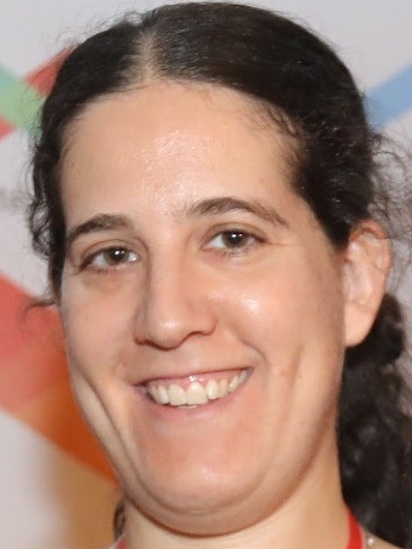
Noga Ron-Zewi (University of Haifa): Highly-efficient local proofs and codesInteractive oracle proofs (IOPs) extend the classical notion of probabilistically-checkable proofs (PCPs) by allowing a verifier to interact with a prover over a small number of rounds, while querying the prover’s messages in only a few locations. A recent line of work gave highly-efficient IOPs outperforming state-of-the-art PCPs, for example, constant-round and constant-query (ZK-)IOPs with only a linear (and even approaching the witness length) amount of communication, as well as (ZK-)IOPs with linear-time prover complexity. These constructions were leveraged in turn to obtain highly-efficient succinct arguments and zero-knowledge proofs. The improved efficiency was obtained by replacing polynomial-based codes, commonly used in such proof systems, with more efficient (tensor-based) codes. In particular, these constructions bypassed a barrier imposed by the need to encode the computation using a multiplication code. In the talk I will survey these highly-efficient IOP constructions, and highlight some interesting open problems raised by these works. 
Tatiana Starikovskaya (École Normale Supérieure de Paris): The Art of Balance: Many Facets of Dyck RecognitionThe Dyck language, consisting of well-balanced parenthesis sequences, is one of the central objects in formal language theory. The Dyck languages appear naturally in numerous applications: balanced-parenthesis encodings succinctly represent rooted trees, programming languages rely heavily on nested structures, and structured data formats such as XML often utilize a notion of balanced parenthesis sequences. Dyck languages also arise in computational biology. RNA and DNA secondary structures can often be viewed as "almost balanced" sequences, so understanding the behaviour of the Dyck languages is often an important building block for designing algorithms on such sequences. In this talk, I will survey several recent developments in Dyck language recognition, highlighting surprising connections to different areas of TCS, including regular language recognition, Boolean matrix multiplication, pattern matching, and graph algorithms. I will also discuss some of the major open questions in the area. 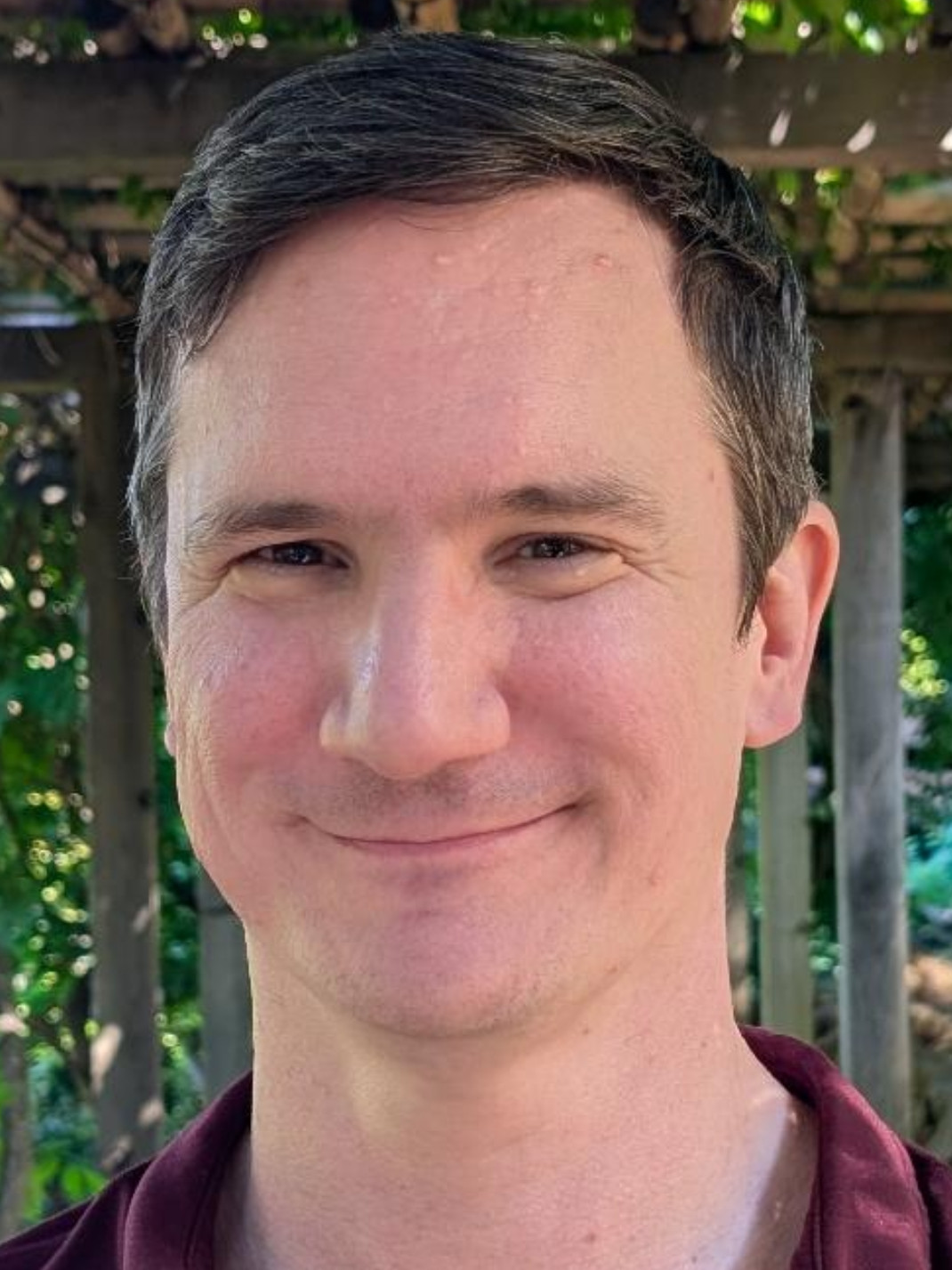
Ryan Williams (Massachusetts Institute of Technology): Some Recent Developments in Space ComplexityGiven a function, what is the minimal memory necessary to compute it? We will describe old and new algorithmic developments that give surprisingly low-space solutions to this question in many cases. We will survey the recent proof that TIME[t] is in SPACE[sqrt{t log t}] for the multitape Turing machine model, and the engine that makes the proof possible: the amazing Cook-Mertz algorithm for a problem called Tree Evaluation. We will also briefly outline some new developments and generalizations that we've recently proved, pushing the low-space frontier beyond multitape Turing machines. ProgrammeThe programme is available here. Social EventsA welcome cocktail will take place on Monday, August 24th. The conference dinner will take place on Wednesday, August 26th at Le Train Bleu, Place Louis Armand, 75012 Paris (map). It is located within Gare de Lyon, which is reachable by Metro lines 1 and 14 (direct from the venue), RER lines A and D, and Bus lines 24, 29, 57, 61, 63, 65, 87 and 91). It is a 30 minutes walk from the venue. The restaurant is on the first floor of Gare de Lyon, in Hall 1. ProceedingsThe proceedings of MFCS 226 are available here. VideosFinding Shortest Reconfiguration Sequence on Independent Set Polytopes Maximum Matchings and Short Voting Paths Nearly Tight Bounds on the Block Number of Boolean Functions in Terms of Sensitivity Smallest suffixient set maintenance in near-real-time Young Researcher's ForumThe Young Researchers Forum (YRF 2026) will be held just before MFCS 2026, on Sunday August 23th. This event will run from 1pm to 6pm, followed by a board-game evening at the board game café Playin, a short walk away from the venue (map). The forum’s aim is to offer an opportunity for young researchers (master’s students, PhD candidates and postdocs) to meet, to discuss, as well as to engage with more experienced researchers on different aspects of scientific research and career. More information on the schedule of the conference. Local Organisers
ContactFor any questions, please don't hesitate to contact us at mfcs2026@irif.fr. Sponsors


Previous Editions of MFCS
|